
Farm Equipment Finance :: News
SHARE

Share this news item!

Autonomous machinery survey puts cost hurdles back in view

Grower feedback may help shape how manufacturers, policy makers and farmers assess the next wave of farm technology

Autonomous machinery survey puts cost hurdles back in view?w=400

The information on this website is general in nature and does not take into account your objectives, financial situation, or needs. Consider seeking personal advice from a licensed adviser before acting on any information.

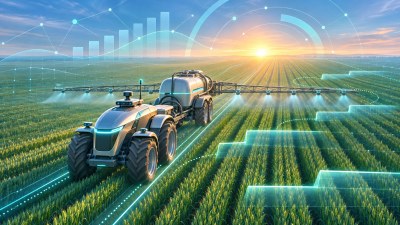
A fresh national survey of Australian grain growers is putting autonomous machinery back on the finance agenda, not because every farm is ready to buy driverless equipment, but because the gap between interest and affordable adoption is becoming harder to ignore.

Grain Central has reported that Grain Producers Australia, the Tractor and Machinery Association of Australia and the Society of Precision Agriculture Australia have launched the 2026 Autonomous Farm Machinery Survey, open until 30 November. The survey is designed to track how growers are using, considering or rejecting autonomous and semi-autonomous equipment, including systems such as GPS guidance, autosteer and more advanced self-operating machinery.

The reported background figures are important for machinery planning. Previous survey work found semi-autonomous use among respondents had risen from 27 per cent to 45 per cent, while interest in learning more about autonomous machinery increased from 61 per cent to 69 per cent. At the same time, affordability as a barrier reportedly rose from 52 per cent to 68 per cent. That combination suggests the technology conversation is shifting from curiosity to a more disciplined capital decision.

For farm businesses, the finance issue is not limited to the purchase price. Autonomous and precision-linked machinery may also involve mapping, software, connectivity, training, servicing arrangements, insurance questions and the risk that an asset depends on support systems beyond the machine itself. A cheaper purchase may still be costly if it cannot be integrated into existing operations, while a more expensive system may need clear evidence of labour savings, timeliness gains, input efficiency or reduced operator fatigue before it can be justified.

This is where broader budgeting becomes useful. Farmers comparing a conventional replacement with a semi-autonomous upgrade may wish to test:

  • the full financed amount after attachments, guidance hardware, setup and freight;
  • whether projected savings are realistic across average, dry and high-yield seasons;
  • how residual or balloon assumptions affect end-of-term risk;
  • the impact of repairs, subscription costs and data connectivity on annual cash flow;
  • whether seasonal repayment structures would better match income timing than equal monthly repayments.

Educational tools can also help farmers compare assumptions before speaking with advisers or providers. For example, a farm equipment finance calculator can illustrate how changes in deposit, trade-in value, term, indicative rate or balloon payment may affect repayments, while still remaining only a general estimate rather than a quote or approval outcome.

The survey will not answer every commercial question for individual farms, and self-reported industry data has limits. However, it should give growers, dealers and policy makers a clearer picture of whether automation is being held back mainly by price, confidence, connectivity or practical fit. For farmers considering their next machinery cycle, that evidence may prove as useful as the technology itself.

Published:Thursday, 26th Nov 2026
Author: Paige Estritori

Please Note: We do not endorse any specific products or companies. Some content is sourced from third parties, including press releases, and may not be independently verified for accuracy or completeness.

Share this news item:

Rate this article

0 Comments

No comments yet. Be the first to share your thoughts.

Finance News

Autonomous machinery survey puts cost hurdles back in view
26 Nov 2026: Paige Estritori
A fresh national survey of Australian grain growers is putting autonomous machinery back on the finance agenda, not because every farm is ready to buy driverless equipment, but because the gap between interest and affordable adoption is becoming harder to ignore. - read more
Electric trailers put farm freight costs under the finance microscope
19 Nov 2026: Paige Estritori
Australian heavy freight is starting to test a new middle ground between conventional diesel trucks and fully electric prime movers, with battery-powered trailers emerging as a possible way to cut fuel use without replacing the truck upfront. For farmers and agribusinesses that rely on livestock, grain, hay, fertiliser or machinery transport, the development is less a simple technology story and more a capital-planning question. - read more
October tractor sales dip sharpens machinery budget focus
12 Nov 2026: Paige Estritori
Australian machinery buying appears to have cooled again, with October tractor sales reportedly falling after a more encouraging September. For farmers planning replacements, the latest Tractor and Machinery Association of Australia figures are less a reason to assume bargains will automatically appear and more a reminder to test upgrade timing, repayment capacity and the true cost of keeping older gear in service. - read more
Robotic dairy example puts connected equipment costs in focus
05 Nov 2026: Paige Estritori
ABC Rural reporting from Tasmania has put a fresh spotlight on how quickly dairy equipment decisions are moving from single-machine purchases to connected operating systems. A north-west Tasmanian dairy farm has been profiled as Australia’s first to combine GPS-enabled virtual fencing collars with robotic milking, using animal data, automated movement and milking hardware to reduce the amount of hands-on labour needed to bring cows through the dairy. - read more


Farm Equipment Finance Articles

How Seasonal Repayments Work for Farm Equipment Finance
Seasonal repayments can help align farm equipment finance with irregular agricultural income, but the right structure depends on cash flow, lender criteria and the risks in each farming operation. - read more
Irrigation Equipment Loans: Finance for Farms
Irrigation systems play a crucial role in the success of farming operations in Australia. With unpredictable weather patterns and the vast dryland areas, having an efficient irrigation system can significantly enhance crop yields and sustain production during periods of low rainfall. From increasing water efficiency to improving crop quality, the benefits are numerous and indispensable for modern agriculture. - read more
Tractor Loans: Finance for Farm Equipment
Tractors are the backbone of modern farming, revolutionizing the way we cultivate and manage farmland. From plowing fields to sowing seeds and reaping harvests, tractors significantly increase efficiency and productivity on the farm. - read more
Tax and Accounting Considerations When Comparing Farm Equipment Finance Options
Farm equipment finance can affect cash flow, GST, depreciation, deductions and record keeping. This guide explains the general tax and accounting concepts Australian farmers may wish to discuss with an accountant before choosing a finance structure. - read more

Knowledgebase
Option:
A financial derivative that gives the buyer the right, but not the obligation, to buy or sell an asset at a specified price on or before a specified date.