
Farm Equipment Finance :: News
SHARE

Share this news item!

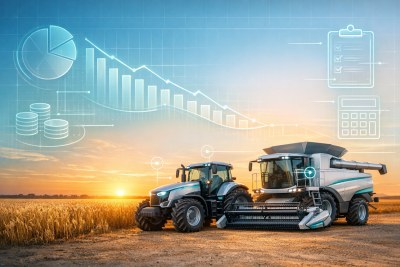
October tractor sales dip sharpens machinery budget focus

Fresh TMA figures suggest farmers are still weighing equipment upgrades carefully after a brief September lift

October tractor sales dip sharpens machinery budget focus?w=400

The information on this website is general in nature and does not take into account your objectives, financial situation, or needs. Consider seeking personal advice from a licensed adviser before acting on any information.

Australian machinery buying appears to have cooled again, with October tractor sales reportedly falling after a more encouraging September.
For farmers planning replacements, the latest Tractor and Machinery Association of Australia figures are less a reason to assume bargains will automatically appear and more a reminder to test upgrade timing, repayment capacity and the true cost of keeping older gear in service.

Trade Farm Machinery reported on 10 November 2026 that about 900 tractors were sold nationally in October, around 15 per cent below the same month last year. On a rolling 12-month basis, tractor sales were said to be 10 per cent behind, with the full-year result forecast at about 9,000 units. That would keep the market well below the elevated replacement cycle seen earlier this decade.

The softness was not limited to small utility machines. The report said every tractor weight category was lower in October, although the larger 200hp-plus segment fell by a smaller margin than other categories. Combine harvester deliveries reached about 220 units for the month, but were still below October 2025, while balers, out-front mowers and self-propelled sprayers also recorded weaker monthly results.

For farm businesses, the practical finance point is that market weakness does not remove the need for disciplined assessment. A slower sales environment may affect stock availability, dealer appetite, delivery timing or trade-in conversations, but those factors vary by district, brand and machine type. The central question remains whether a proposed machine improves capacity, reliability, labour efficiency or operating cost enough to justify the capital commitment.

That assessment is especially important where growers are balancing harvest revenue, higher input bills, seasonal variability and existing debt. Delaying a purchase can preserve cash, but it can also increase repair risk, downtime exposure and contractor reliance. Moving early can secure capacity, yet it may add repayment pressure before the productivity benefit is fully realised. Farmers comparing new and used farm machinery may also need to weigh warranty coverage, hours, service history, residual value and parts support, rather than focusing only on the sticker price.

A useful planning exercise is to separate the machinery decision from the finance structure. First, estimate the operational value of the upgrade. Then test different deposit, trade-in, term and balloon assumptions using an educational tool such as the Farm Equipment Finance Calculator. Calculator outputs are only estimates, but they can help show how small changes in structure may affect regular cash flow and total finance cost.

The October data suggests caution is still shaping machinery decisions across Australian agriculture. For producers, that caution can be constructive when it leads to clearer replacement priorities, more realistic cash-flow modelling and a better understanding of the trade-offs between upgrading now, buying used, repairing longer or staging purchases over more than one season.

Published:Thursday, 12th Nov 2026
Author: Paige Estritori

Please Note: We do not endorse any specific products or companies. Some content is sourced from third parties, including press releases, and may not be independently verified for accuracy or completeness.

Share this news item:

Rate this article

0 Comments

No comments yet. Be the first to share your thoughts.

Finance News

October tractor sales dip sharpens machinery budget focus
12 Nov 2026: Paige Estritori
Australian machinery buying appears to have cooled again, with October tractor sales reportedly falling after a more encouraging September. For farmers planning replacements, the latest Tractor and Machinery Association of Australia figures are less a reason to assume bargains will automatically appear and more a reminder to test upgrade timing, repayment capacity and the true cost of keeping older gear in service. - read more
Robotic dairy example puts connected equipment costs in focus
05 Nov 2026: Paige Estritori
ABC Rural reporting from Tasmania has put a fresh spotlight on how quickly dairy equipment decisions are moving from single-machine purchases to connected operating systems. A north-west Tasmanian dairy farm has been profiled as Australia’s first to combine GPS-enabled virtual fencing collars with robotic milking, using animal data, automated movement and milking hardware to reduce the amount of hands-on labour needed to bring cows through the dairy. - read more
Fuel volatility puts tractor efficiency back on the finance agenda
29 Oct 2026: Paige Estritori
Recent rural reporting on diesel price pressure and a high-horsepower tractor completing a renewable-fuel journey through Western Australia are sharpening a practical finance question for farmers: when machinery is assessed, how much weight should be given to fuel use, energy flexibility and operating resilience, not just the upfront purchase price? - read more
Water upgrades move higher on the machinery finance agenda
16 Sep 2026: Paige Estritori
Recent rural reporting on dry seasonal conditions is again highlighting a practical reality for Australian farms: water infrastructure is not just a production issue, it is increasingly a finance decision. As rainfall variability affects pasture growth, crop planning and livestock carrying capacity, many producers are reviewing whether existing pumps, tanks, troughs, bores and pipework can keep up with the next stretch of difficult conditions. - read more


Farm Equipment Finance Articles

How Seasonal Repayments Work for Farm Equipment Finance
Seasonal repayments can help align farm equipment finance with irregular agricultural income, but the right structure depends on cash flow, lender criteria and the risks in each farming operation. - read more
Tractor Loans: Finance for Farm Equipment
Tractors are the backbone of modern farming, revolutionizing the way we cultivate and manage farmland. From plowing fields to sowing seeds and reaping harvests, tractors significantly increase efficiency and productivity on the farm. - read more
Farm Equipment Finance Eligibility and Application Requirements in Australia
Applying for farm equipment finance usually involves showing how the asset will support your operation, how repayments may be managed and what financial information a lender needs to assess the application. - read more
Financing New and Used Farm Machinery in Australia
New and used farm machinery can both be financed, but lenders may assess each purchase differently. This guide explains the practical factors farmers should consider, including asset age, condition, valuation, documentation, warranties, resale value and repayment planning. - read more

Knowledgebase
Leverage:
The use of borrowed funds to increase the potential return of an investment, but which also increases potential risk.