
Farm Equipment Finance :: News
SHARE

Share this news item!

Electric trailers put farm freight costs under the finance microscope

New Australian powered-trailer trials highlight why diesel savings must be tested against capital cost, payload and charging realities

Electric trailers put farm freight costs under the finance microscope?w=400

The information on this website is general in nature and does not take into account your objectives, financial situation, or needs. Consider seeking personal advice from a licensed adviser before acting on any information.

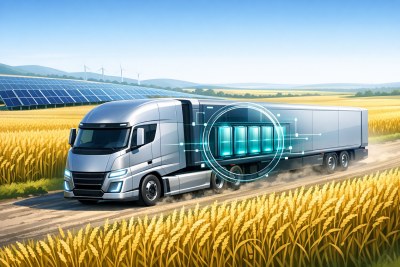
Australian heavy freight is starting to test a new middle ground between conventional diesel trucks and fully electric prime movers, with battery-powered trailers emerging as a possible way to cut fuel use without replacing the truck upfront.
For farmers and agribusinesses that rely on livestock, grain, hay, fertiliser or machinery transport, the development is less a simple technology story and more a capital-planning question.

ABC Landline reported on 14 November 2026 that South Australian company VE Motion has developed an electric trailer designed to help propel a diesel truck, particularly under load. The company is targeting a substantial diesel reduction, while the first commercial customer discussed in the report indicated that even a smaller verified saving could be worthwhile. That distinction matters: a claimed saving, a trial result and a reliable commercial outcome are not the same thing.

The finance issue is sharpened by the expected price range reported for the technology, which sits in the hundreds of thousands of dollars. For a farm business or rural transport operator, that sort of outlay would need to be weighed against annual kilometres, fuel burn, route profile, trailer utilisation, maintenance, insurance, financing costs and the value of any emissions or customer-contract benefits. A truck doing frequent heavy runs over predictable routes may present a very different case from a seasonal unit that spends long periods parked.

There are also practical constraints. Powered trailers add batteries, drive components and control systems, so payload, axle loads and regulatory approval cannot be treated as afterthoughts. Industry guidance for powered-trailer trials has been developed, but the latest reporting indicates public-road approval and real-world testing remain important hurdles. For agriculture, where timing and reliability can be as important as fuel cost, downtime risk and access to service support may be just as relevant as the diesel saving percentage.

The development also fits into a broader period of fuel volatility, where many machinery and transport decisions are being reassessed through total operating cost rather than purchase price alone. Farmers considering any new transport technology may wish to compare scenarios using conservative assumptions, including lower-than-promised fuel savings and higher electricity or infrastructure costs.

A general planning tool such as the Farm Equipment Finance Calculator can help illustrate how price, deposit, trade-in value, term and residual assumptions may affect repayments, but it cannot decide whether a particular powered trailer is commercially suitable. The key lesson from this early stage is caution rather than dismissal: electric-assist freight equipment may become useful for some rural tasks, but the finance case will depend on verified performance, not headline targets.

Published:Thursday, 19th Nov 2026
Author: Paige Estritori

Please Note: We do not endorse any specific products or companies. Some content is sourced from third parties, including press releases, and may not be independently verified for accuracy or completeness.

Share this news item:

Rate this article

0 Comments

No comments yet. Be the first to share your thoughts.

Finance News

Electric trailers put farm freight costs under the finance microscope
19 Nov 2026: Paige Estritori
Australian heavy freight is starting to test a new middle ground between conventional diesel trucks and fully electric prime movers, with battery-powered trailers emerging as a possible way to cut fuel use without replacing the truck upfront. For farmers and agribusinesses that rely on livestock, grain, hay, fertiliser or machinery transport, the development is less a simple technology story and more a capital-planning question. - read more
October tractor sales dip sharpens machinery budget focus
12 Nov 2026: Paige Estritori
Australian machinery buying appears to have cooled again, with October tractor sales reportedly falling after a more encouraging September. For farmers planning replacements, the latest Tractor and Machinery Association of Australia figures are less a reason to assume bargains will automatically appear and more a reminder to test upgrade timing, repayment capacity and the true cost of keeping older gear in service. - read more
Robotic dairy example puts connected equipment costs in focus
05 Nov 2026: Paige Estritori
ABC Rural reporting from Tasmania has put a fresh spotlight on how quickly dairy equipment decisions are moving from single-machine purchases to connected operating systems. A north-west Tasmanian dairy farm has been profiled as Australia’s first to combine GPS-enabled virtual fencing collars with robotic milking, using animal data, automated movement and milking hardware to reduce the amount of hands-on labour needed to bring cows through the dairy. - read more
Fuel volatility puts tractor efficiency back on the finance agenda
29 Oct 2026: Paige Estritori
Recent rural reporting on diesel price pressure and a high-horsepower tractor completing a renewable-fuel journey through Western Australia are sharpening a practical finance question for farmers: when machinery is assessed, how much weight should be given to fuel use, energy flexibility and operating resilience, not just the upfront purchase price? - read more


Farm Equipment Finance Articles

How Seasonal Repayments Work for Farm Equipment Finance
Seasonal repayments can help align farm equipment finance with irregular agricultural income, but the right structure depends on cash flow, lender criteria and the risks in each farming operation. - read more
Irrigation Equipment Loans: Finance for Farms
Irrigation systems play a crucial role in the success of farming operations in Australia. With unpredictable weather patterns and the vast dryland areas, having an efficient irrigation system can significantly enhance crop yields and sustain production during periods of low rainfall. From increasing water efficiency to improving crop quality, the benefits are numerous and indispensable for modern agriculture. - read more
Farm Equipment Finance Eligibility and Application Requirements in Australia
Applying for farm equipment finance usually involves showing how the asset will support your operation, how repayments may be managed and what financial information a lender needs to assess the application. - read more
Financing New and Used Farm Machinery in Australia
New and used farm machinery can both be financed, but lenders may assess each purchase differently. This guide explains the practical factors farmers should consider, including asset age, condition, valuation, documentation, warranties, resale value and repayment planning. - read more

Knowledgebase
Bear Market:
A market condition where the prices of securities are falling, and widespread pessimism causes the negative sentiment to be self-sustaining.