
Farm Equipment Finance :: News
SHARE

Share this news item!

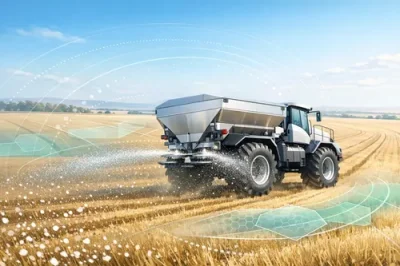
Smarter spreaders put fertiliser upgrades on the budget list

Why accuracy, mapping and input control are changing the finance conversation

Smarter spreaders put fertiliser upgrades on the budget list?w=400

The information on this website is general in nature and does not take into account your objectives, financial situation, or needs. Consider seeking personal advice from a licensed adviser before acting on any information.

Recent rural machinery coverage is again highlighting the growing role of smarter fertiliser spreading equipment in Australian farming systems.
For growers facing high input costs, tighter application windows and more pressure to document paddock performance, spreaders are no longer being judged only on capacity and width.
Accuracy, control and data compatibility are becoming central to the buying decision.

Newer machines are increasingly being promoted with features such as variable-rate capability, weigh cells, section control, boundary spreading, improved metering and integration with prescription maps. The practical attraction is clear: apply fertiliser where it is needed, reduce waste at paddock edges, improve record keeping and make better use of every tonne purchased. In seasons where fertiliser prices or availability are uncertain, those gains can carry real financial weight.

For farm businesses, however, the upgrade case needs to be tested carefully. A more advanced spreader may support improved nutrient efficiency, but it can also bring higher purchase costs, software requirements, calibration demands and operator training. The value of the investment depends on hectares covered, fertiliser program complexity, soil variability, existing guidance systems and how consistently the technology will be used across the enterprise.

This is where finance planning becomes important. Rather than treating a spreader upgrade as a simple replacement purchase, growers may need to assess the equipment as part of a broader input-management strategy. That includes considering whether the machine will reduce overlap, support variable-rate applications, improve timing, or free up labour during peak periods. It also means checking how repayments align with seasonal cash flow, fertiliser purchasing cycles and expected production returns.

There is a useful parallel with precision spraying, where the strongest business cases are often built around both operational benefits and input savings. Fertiliser technology can follow a similar pattern, but assumptions should be conservative. Before committing, growers may want to model repayments under different deposit, trade-in, term and balloon scenarios, especially if the purchase is being bundled with other machinery or guidance upgrades.

The broader message is that nutrient application equipment is moving into the same capital-planning category as seeders, sprayers and harvest gear. The technology may help farms become more precise and efficient, but the finance structure still needs to suit the business. For many growers, the best outcome will come from matching the machine’s agronomic benefits with a repayment plan that protects working capital through the season.

Published:Wednesday, 9th Sep 2026
Author: Paige Estritori

Please Note: We do not endorse any specific products or companies. Some content is sourced from third parties, including press releases, and may not be independently verified for accuracy or completeness.

Share this news item:

Rate this article

0 Comments

No comments yet. Be the first to share your thoughts.

Finance News

October tractor sales dip sharpens machinery budget focus
12 Nov 2026: Paige Estritori
Australian machinery buying appears to have cooled again, with October tractor sales reportedly falling after a more encouraging September. For farmers planning replacements, the latest Tractor and Machinery Association of Australia figures are less a reason to assume bargains will automatically appear and more a reminder to test upgrade timing, repayment capacity and the true cost of keeping older gear in service. - read more
Robotic dairy example puts connected equipment costs in focus
05 Nov 2026: Paige Estritori
ABC Rural reporting from Tasmania has put a fresh spotlight on how quickly dairy equipment decisions are moving from single-machine purchases to connected operating systems. A north-west Tasmanian dairy farm has been profiled as Australia’s first to combine GPS-enabled virtual fencing collars with robotic milking, using animal data, automated movement and milking hardware to reduce the amount of hands-on labour needed to bring cows through the dairy. - read more
Fuel volatility puts tractor efficiency back on the finance agenda
29 Oct 2026: Paige Estritori
Recent rural reporting on diesel price pressure and a high-horsepower tractor completing a renewable-fuel journey through Western Australia are sharpening a practical finance question for farmers: when machinery is assessed, how much weight should be given to fuel use, energy flexibility and operating resilience, not just the upfront purchase price? - read more
Water upgrades move higher on the machinery finance agenda
16 Sep 2026: Paige Estritori
Recent rural reporting on dry seasonal conditions is again highlighting a practical reality for Australian farms: water infrastructure is not just a production issue, it is increasingly a finance decision. As rainfall variability affects pasture growth, crop planning and livestock carrying capacity, many producers are reviewing whether existing pumps, tanks, troughs, bores and pipework can keep up with the next stretch of difficult conditions. - read more


Farm Equipment Finance Articles

Farm Equipment Finance Eligibility and Application Requirements in Australia
Applying for farm equipment finance usually involves showing how the asset will support your operation, how repayments may be managed and what financial information a lender needs to assess the application. - read more
Financing New and Used Farm Machinery in Australia
New and used farm machinery can both be financed, but lenders may assess each purchase differently. This guide explains the practical factors farmers should consider, including asset age, condition, valuation, documentation, warranties, resale value and repayment planning. - read more
Irrigation Equipment Loans: Finance for Farms
Irrigation systems play a crucial role in the success of farming operations in Australia. With unpredictable weather patterns and the vast dryland areas, having an efficient irrigation system can significantly enhance crop yields and sustain production during periods of low rainfall. From increasing water efficiency to improving crop quality, the benefits are numerous and indispensable for modern agriculture. - read more
Tax and Accounting Considerations When Comparing Farm Equipment Finance Options
Farm equipment finance can affect cash flow, GST, depreciation, deductions and record keeping. This guide explains the general tax and accounting concepts Australian farmers may wish to discuss with an accountant before choosing a finance structure. - read more

Knowledgebase
Credit Utilization:
The amount of credit you are using compared to the amount of credit available to you, typically expressed as a percentage.