Why Farm Drones Are Becoming a Serious Finance Decision
Aerial tools are moving into day-to-day farm budgets
The information on this website is general in nature and does not take into account your objectives, financial situation, or needs. Consider seeking personal advice from a licensed adviser before acting on any information.
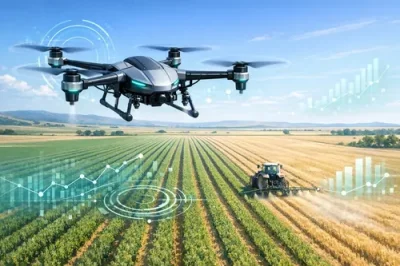
Recent rural machinery coverage is showing that drones are no longer being discussed only as experimental gadgets or occasional mapping tools.
Across cropping, horticulture and livestock enterprises, higher-capacity agricultural drones are increasingly being considered for spraying, crop scouting, mapping, water checks, fence inspection and pasture monitoring.
For farm businesses, that shifts the conversation from technology curiosity to capital planning.
The appeal is easy to understand. A drone can reach wet, steep or awkward paddocks without putting a larger machine on the ground. It can help identify crop stress earlier, reduce unnecessary vehicle hours, improve labour efficiency and support more targeted chemical or fertiliser decisions. In some situations, it may complement a boom spray, ute, quad bike or contractor arrangement rather than replace them outright.
However, the finance decision is more complex than buying a single piece of hardware. A practical drone package may include batteries, charging equipment, spray tanks or spreader attachments, mapping sensors, software subscriptions, data storage, training, maintenance and insurance. Larger payload machines may also bring regulatory, chemical handling and operator competency requirements. Those costs need to be assessed together, not treated as afterthoughts.
For growers already reviewing autonomous machinery, precision spraying or digital guidance systems, drones are another example of equipment becoming more technology-heavy. This is an extension of the broader automation story: the asset itself matters, but so does the support ecosystem around it. Finance structures may need to account for shorter technology cycles, upgrade pathways and the possibility that software or sensor performance becomes just as important as mechanical durability.
Cash flow timing also deserves attention. A drone bought for pre-sowing weed checks, in-crop monitoring or harvest logistics may deliver value at specific points in the season, while repayments continue year-round unless structured otherwise. Farmers should estimate repayments against conservative productivity assumptions, then test whether the purchase still makes sense if seasonal conditions delay use or reduce the expected saving.
The strongest business cases are likely to come where the drone solves a clearly identified bottleneck: too few labour hours, hard-to-access country, high contractor costs, slow crop diagnosis or the need for more frequent monitoring. As with any farm equipment finance decision, the question is not simply whether the technology is impressive. It is whether the full package improves the farm’s operating position enough to justify the capital cost, finance term and ongoing support obligations.
Please Note: We do not endorse any specific products or companies. Some content is sourced from third parties, including press releases, and may not be independently verified for accuracy or completeness.
Recent rural reporting on dry seasonal conditions is again highlighting a practical reality for Australian farms: water infrastructure is not just a production issue, it is increasingly a finance decision. As rainfall variability affects pasture growth, crop planning and livestock carrying capacity, many producers are reviewing whether existing pumps, tanks, troughs, bores and pipework can keep up with the next stretch of difficult conditions. - read more
Recent rural machinery coverage is again highlighting the growing role of smarter fertiliser spreading equipment in Australian farming systems. For growers facing high input costs, tighter application windows and more pressure to document paddock performance, spreaders are no longer being judged only on capacity and width. Accuracy, control and data compatibility are becoming central to the buying decision. - read more
Recent rural machinery coverage is showing that drones are no longer being discussed only as experimental gadgets or occasional mapping tools. Across cropping, horticulture and livestock enterprises, higher-capacity agricultural drones are increasingly being considered for spraying, crop scouting, mapping, water checks, fence inspection and pasture monitoring. For farm businesses, that shifts the conversation from technology curiosity to capital planning. - read more
Recent rural machinery coverage is again drawing attention to the growing scale of harvest equipment being considered by Australian grain businesses. Larger headers, wider fronts, higher-capacity grain handling and more connected onboard technology are no longer just showpiece features. For growers working against short harvest windows, labour shortages and weather volatility, the appeal is clear: more tonnes through the machine when conditions are right. - read more
Tractors are the backbone of modern farming, revolutionizing the way we cultivate and manage farmland. From plowing fields to sowing seeds and reaping harvests, tractors significantly increase efficiency and productivity on the farm. - read more
Irrigation systems play a crucial role in the success of farming operations in Australia. With unpredictable weather patterns and the vast dryland areas, having an efficient irrigation system can significantly enhance crop yields and sustain production during periods of low rainfall. From increasing water efficiency to improving crop quality, the benefits are numerous and indispensable for modern agriculture. - read more
In Australia, the agricultural finance landscape is as diverse as the vast farmlands it supports. With a growing need to enhance productivity and efficiency, farmers are turning to advanced machinery to keep pace with modern demands. This is where financial solutions like harvester loans come into play. - read more
Farm equipment plays a pivotal role in modern agriculture, driving efficiency and productivity across Australia's vast and diverse landscapes. From tractors and combines to the latest irrigation systems, these sophisticated tools are essential for meeting the demands of a growing population and climate challenges. Without the right equipment, farmers would struggle to maintain the quality and quantity of their produce. - read more
Knowledgebase
Adjustable-Rate Mortgage (ARM): A type of mortgage in which the interest rate applied on the outstanding balance varies throughout the life of the loan.



No comments yet. Be the first to share your thoughts.